Below are the materials you will need for class as well as a summary and some major points of the first 3 scenes of the play. Review them as you need.
First things first: remember that this play was written for King James I who had just become king of England. James was from Scotland, so Shakespeare wrote a play about Scotland for him. James was also the first stable leader England had had for awhile, so it was important to portray James as a ruler who didn't have any huge scandals or skeletons in his closet.
So, Shakespeare makes a not-so-subtle reference to James' great-great-great-great grandfather, Banquo, by making him a morally decent character in the play.
He also solidifies James' role as king through the plot: while Macbeth is prophesied to become king, Banquo is told that while he will never be king, his sons and grandsons and so forth will be.
James is one of those great-great-great grandchildren.
Now, the royal system in Scotland is kind of funny compared to what we know about other countries. Scotland is ruled by a king. In Macbeth, his name is Duncan. Scotland used to be ruled by multiple tribes during the Anglo-Saxon period, so as time went on, that system sort of stuck, even when they switched to a monarchy. So, Duncan has a bunch of smaller "mini-kingdoms" or cities and villages that he has other people run to help him keep order. These people are called thanes. They are like "assistant kings."
When the play opens, we are greeted by the three witches (referred to as the Weird Sisters, which is a reference to Greek mythology in which three Morae or Fates controlled the lives of mortals. These Fates were portrayed as three sisters).
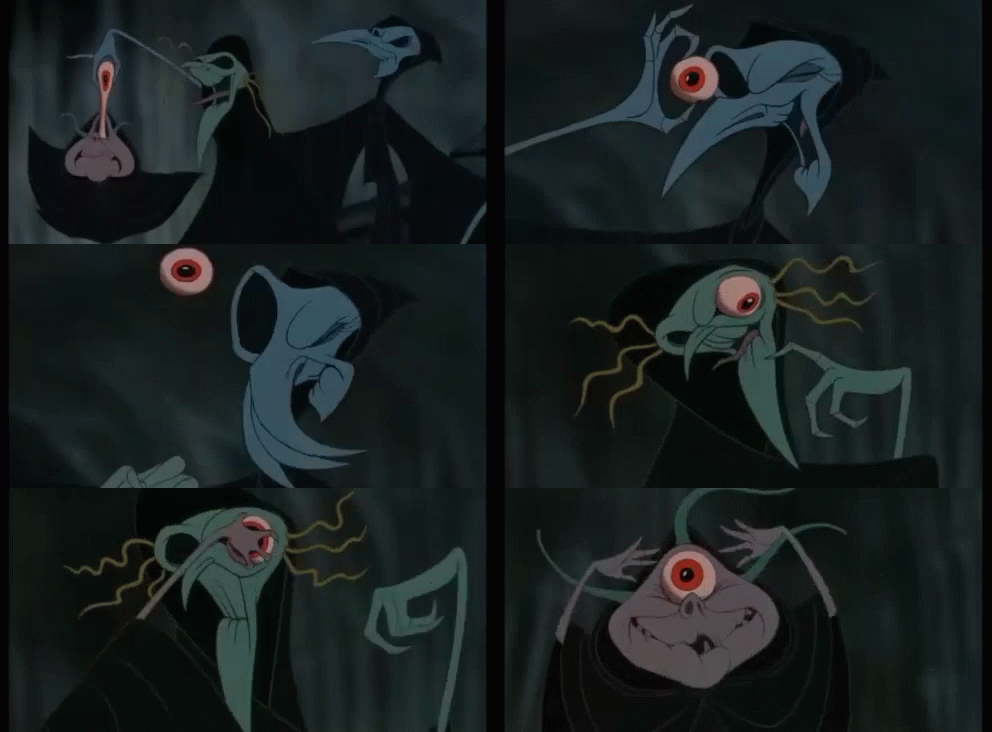
The witches state they will meet at the end of the war to speak to Macbeth. Then, they utter an important line.
"Fair is foul, and foul is fair."
Shakespeare didn't start the play off this way just because. He was attempting to set the stage for a long-running theme throughout the play. By saying that both foul and fair are one in the same, the witches are implying that the lines between good and evil, natural and unnatural, and other binaries will begin to blur. Good men will turn bad, bad men will turn good. The rules of nature are bending and breaking. Things are not always as they seem.

Macbeth begins in the play as the Thane of Glamis. Glamis is a small village and Macbeth is a loyal and devout subject, but he doesn't have that much power when it comes to the country.
So, let's talk about the setting. We begin the play in the midst of a civil war. The players involved?
| | | |
| | | |
| | |
When the play opens, the civil war is in its final days. Macbeth kills Macdonwald in a battle that he seemed doomed to lose (so Macbeth seems capable of fighting against fate) and actually slices Macdonwald open from belly to jaw, cuts his head off, and sticks it on a spike. Macbeth is obviously a very fierce warrior. He is honorable and loyal to Duncan, but he can clearly mess someone up if he wants to.
Macbeth also drives back the King of Norway's army and forces them into a surrender in which the King of Norway pays Scotland $10,000 in order to reach a truce.
As thanks for this, King Duncan orders that Macbeth be given the title held by the Thane of Cawdor and the land he ruled over.
Meanwhile, Macbeth and Banquo are leaving the battlefield and run into the witches. These witches have been discussing their very petty and cruel treatment of people who do not give them what they want when the two stumble upon them.
When Banquo speaks to the witches, the witches then tell Macbeth he is the Thane of Cawdor and will soon become king. Macbeth is, understandably, shocked and scared. Saying something like that is pretty close to treason and Macbeth is a loyal subject, so he doesn't appreciate the news.
When Banquo presses them further, the witches say that Banquo will never become king, but his descendants will be kings in the future.
Then the witches just disappear. Yes, they just vanish. So quickly that Banquo questions whether or not they had hallucinated the whole thing.
When Macbeth gets the news he is becoming Thane of Cawdor, his thoughts understandably turn towards the prediction of becoming king. He considers the fact that Duncan has to die in order for this to happen, but stops just short of considering murder. However, Duncan also has two sons - Malcolm and Donalbain - which complicates things.
He presses Banquo to consider the prediction that his sons will become kings but Banquo warns Macbeth that even though the witches spoke true, they may have left out the "catch" that inevitably follow such significant predictions (another blurring between the lines of good and evil; witches and their plans are evil, but the truth is good).
Macbeth eventually determines after a great deal of thought, to simply leave the prediction to chance. If it is meant to happen, it will happen.
TO SUMMARIZE (NOT A REPLACEMENT FOR READING):
- We see two big themes/thematic concepts appear here:
- The blending of good and evil/things aren't always what they seem
- The witches speaking truth but for possibly nefarious purposes
- Macbeth winning the war but having to kill his own countrymen to do so
- The witches been perceived as real and unreal, man and woman, living and dead all at once
- Predictions and fate
- Macbeth wins against fate in battle, but cannot fight the fate of becoming Thane of Cawdor
- Macbeth debates whether or not he is in control of his fate to become king, or if he even should be (as it would mean murdering his friend and king to do so)
- We see the witches as powerful, vengeful, cruel, and ruthless. They take what they want and if they cannot get it, they torture and torment people. Witchcraft is not a positive force in this play. It is used only for evil purposes.
- Macbeth uses an aside when trying to communicate secretly with Banquo and also to narrate his inner-most thoughts. An aside is a moment when the actor speaks to themselves or to another character and no other characters are meant to hear what they are saying.
- The prediction of Macbeth becoming king and Banquo's future offspring becoming kings is an example of foreshadowing.


No comments:
Post a Comment